
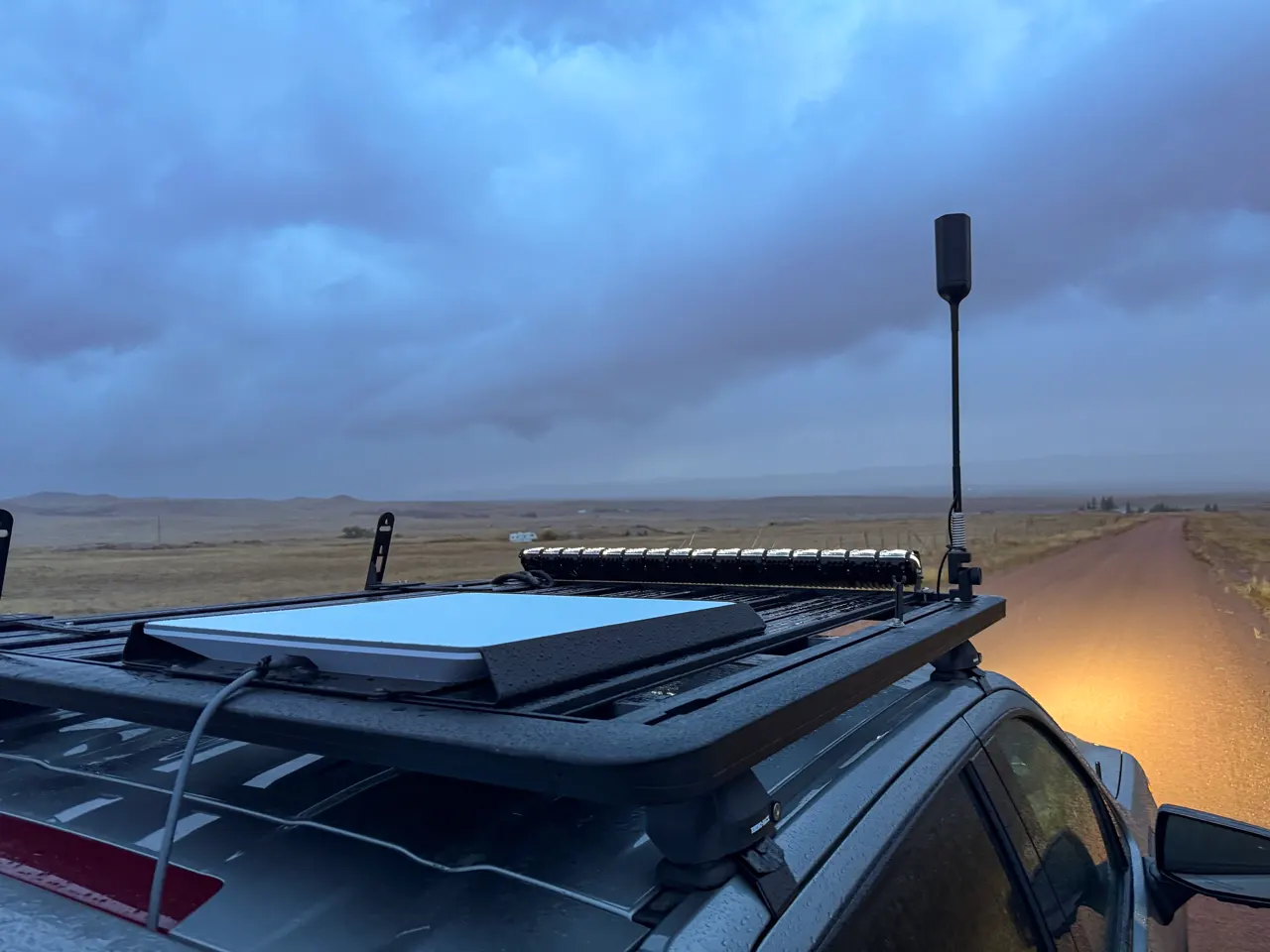
01When aid needs an internet connection
In West Darfur in October 2024, aid organisations faced a practical question: how could they support people with cash assistance when connectivity was missing? Minutes from the Emergency Telecommunications Cluster, a group coordinating emergency communications, describe mobile network outages in western Sudan. Starlink was among the important communications services there. Further terminals were intended to help expand cash assistance and connect traders. In the east, however, organisations were working on connections through Sudatel and an undersea cable. [1]
A working connection in another city does little for people on the ground. They need one that reaches them. The report does not establish that all aid organisations were entirely dependent on Starlink. Whether they need the service depends on the connections available at each location.
As a provider takes on more tasks, an additional connection can become a requirement for everyday life. Customers might then find it almost impossible to do without the service, even if they object to new terms.
02The proposed purchase, briefly explained
On 8 October 2026, Grain Management announced an agreement under which SpaceX would acquire its nationwide US mobile spectrum portfolio. Completion still requires approval from the US communications regulator, the FCCFCCUS agency regulating radio spectrum and communications.. The spectrum is intended to support Starlink connections through ground stations and satellites. The purchase would not immediately create a finished mobile network or grant rights to operate worldwide. It could, however, expand the areas in which SpaceX itself provides communications services. [2]
Expansion could lead more people and institutions to entrust their communications to a company they could hardly replace at short notice.
03How dependence could develop
A new provider can improve competition. People who previously lacked a usable connection gain opportunities for work, education and contact with others. An additional communications route can also make a public authority more resilient.
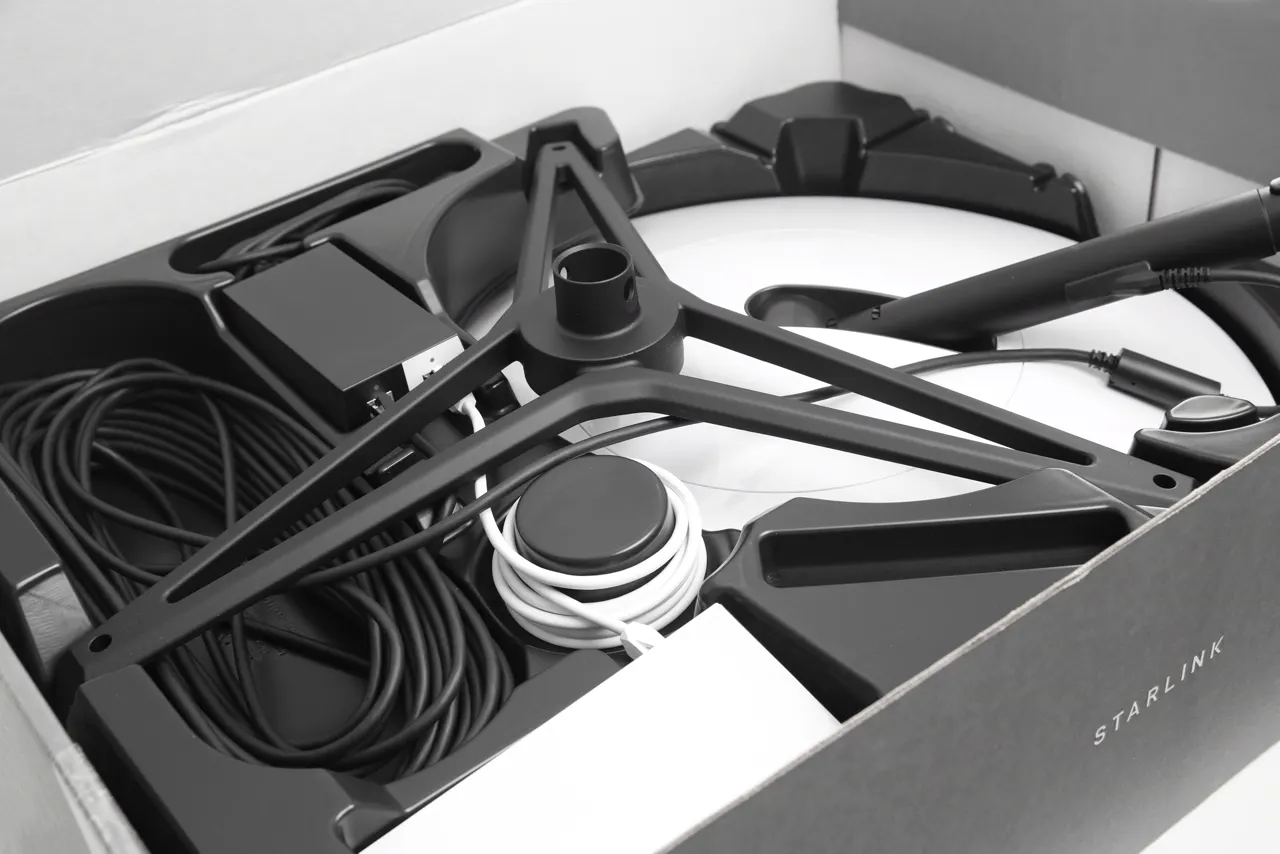
A possible long-term scenario therefore usually begins with a sensible decision: an institution buys a connection that works well and is affordable. Gradually, its working practices adapt to it. Staff know the system, equipment is installed and contracts are in place. A second connection is rarely needed and increasingly looks like an avoidable expense.
At the next price increase, the institution could cancel. Switching providers would be possible, but difficult in practice. A replacement might first have to be ordered, set up and tested.
This sequence has not been established at the aid organisations mentioned here. But the scenario helps assess a purchase: is a replacement available, how long would switching take, and which tasks could continue in the meantime?
Dependence cannot therefore be measured by contract duration alone. A service that can be cancelled monthly may be hard to replace if no comparable offer is available at the location. Conversely, a long-standing customer need not be dependent if an independent backup connection is ready.

04Could Musk build a monopoly?
SpaceX could achieve a dominant position in individual markets. The spectrum purchase does not establish a worldwide monopoly over the internet. Fixed-line, mobile and different satellite services cannot simply be treated as a single competitive market either.
The US Federal Trade Commission describes monopoly power as substantial and durable market power. Relevant factors include the alternatives to which customers can turn. A company can also achieve a strong position through a better product without automatically acting unlawfully. [3]
For Starlink, the market being considered and the location matter. Competition in satellite internet as a whole says little about which alternative is available at a remote site or still works after a disaster. Acute dependence is not automatically a monopoly in legal terms, but it can confer considerable power.
The market could narrow as follows: SpaceX gains many customers and spreads its investment costs across more contracts. Competitors also need capital, equipment and customers. If they fail to grow enough or lose access to important customers, the choice could shrink. Remaining customers would find it harder to resist later price increases.
Whether the market is actually developing that way could be assessed through specific changes: competitors exiting, exclusionary contracts, rising switching costs or prices that customers can hardly escape. A low introductory price alone does not prove a plan to drive competitors out.
Events could also take a different course: several providers expand, make changing equipment easier and compete for customers. Starlink's growth would then increase choice, provided other companies could remain viable alongside it.
05How much does one man decide?
SpaceX has other shareholders. Its share structure nevertheless concentrates control in Elon Musk's hands. An offering document filed with the SECSECThe US securities regulator. Company filings disclose matters including voting rights and shareholdings. in June 2026 describes different voting rights for the share classes and Musk's control over the election of the Board of Directors. An ownership filing signed in August confirms the principle: a Class B share carries ten votes, a Class A share one. [4][5]
These voting rights give Musk control over the company. They do not establish that he personally orders every account suspension. This research does not have a complete public description of the internal responsibilities for major access restrictions.
Customers would need to know who must approve a major restriction and who can review it independently. That matters particularly when a political conflict threatens service. The existence of staff and contracts alone does not show whether they can effectively constrain such a decision.
The problem would not disappear with a different controlling owner. Where a few people control important infrastructure, their interests, conflicts and the choice of their successors also affect everyone who needs that infrastructure.
06Why Musk himself adds to the risk
Musk uses wealth, reach and corporate power for political purposes too. Starlink customers therefore need to look beyond technical reliability. They must also be able to trust that their provider's political conflicts will not jeopardise their service.
Trump, government restructuring and right-wing politics
Musk supported Trump and other Republicans in the 2024 election campaign with more than a quarter of a billion dollars. He then worked as a temporary employee for Trump's administration until the end of May 2025. Through DOGE, the programme to restructure and cut costs in the federal administration, he drove major staffing cuts. Reuters put the reduction at around 260,000 employees by late May. This included buyout programmes and early retirement as well as dismissals. It would therefore be wrong to describe the figure as 260,000 people personally dismissed by Musk. That does not remove his political responsibility for helping drive the policy. Reuters, 30 May 2025

The formal division of power was disputed: the White House told a court that Musk advised the president but could not make government decisions himself. That was the administration's account of his powers. It does not rule out political influence. AP, 18 February 2025
Musk also deliberately supported right-wing politics in Germany. He promoted the AfD and gave Alice Weidel an extensive conversation on X in January 2025. Extremism researcher Jan Rathje described the content Musk shared as conspiracist and far-right in comments to ARD's fact-checking team. ARD fact-check
His appearance at the celebration of Trump's inauguration on 20 January 2025 forms part of this political picture. Twice, Musk made a gesture with his right arm extended that fascism scholar Ruth Ben-Ghiat characterised as a Nazi salute. Musk rejected the criticism; the Anti-Defamation League interpreted the movement as an awkward gesture of enthusiasm. The gesture and the dispute over its meaning are documented. They do not establish his inner intention with certainty. Reuters, Ben-Ghiat's original post
When a political dispute reaches essential services
On 5 June 2025, Trump threatened to withdraw government contracts from Musk's companies. Musk then announced that he would decommission the Dragon spacecraft used by NASA. A few hours later, he withdrew the announcement. It was a threat followed by a reversal, not an actual decommissioning or a Starlink shutdown. Reuters
Musk has therefore already publicly drawn the operation of an important SpaceX service into a political dispute. Starlink customers also need protection against becoming leverage in such a dispute. A contract alone does little for them if the connection fails during the conflict.
What Twitter and Grok show about responsibility

After the Twitter takeover, it became apparent how quickly an owner could change the rules of a major communications platform. In November 2022, Musk reinstated Trump's account after organising a user poll himself. In December, Twitter dissolved its existing external safety advisory council. The company announced that it would draw on external expertise in other ways. Reuters on reinstatement, Reuters on the council's dissolution
Safety staffing also fell substantially: X reported to Australia's eSafety Commissioner that its worldwide staff and external contractors working on platform and user safety fell from 4,062 to 2,849 between 27 October 2022 and 31 May 2023. This establishes a substantial reduction, but does not by itself establish the effect of each individual moderation decision. eSafety report, page 22
In early January 2026, Reuters documented that the AI service Grok generated non-consensual sexualised images of women and sexualised depictions of children. When asked about the reports, xAI responded with “Legacy Media Lies”. Musk reacted with laughing emojis to individual bikini edits of adults and comments about such images. The laughing reactions are documented. They can be understood as trivialising these images; they do not establish explicit approval of sexualised images of children. Reuters, 2–3 January 2026
On 14 January, Musk said he was unaware of nude images of minors generated by Grok. xAI subsequently announced technical restrictions on editing images of real people; X said it took reports of child sexual abuse material seriously. Reuters, 14–15 January 2026 On 26 January, the European Commission opened an investigation into whether X had adequately assessed and mitigated the risks of Grok's features. Opening proceedings was not a final finding of an infringement. European Commission
xAI is now challenging a Minnesota law that regulates AI-generated nudification images. After introducing additional image-editing restrictions there, the company also argued in court that it feared losing users and revenue. Court decision of 4 September 2026 In early October, it obtained interim relief. This is not a final decision on the law. Court order of 2 October 2026 xAI invokes freedom of speech and says it maintains safeguards against non-consensual sexualised images. The company's motion The provider earns money from the use of its image features. At the same time, it challenges legal limits that restrict that use.
A social platform, an AI service and an internet connection are different things. These cases do not prove that a Starlink restriction is imminent. But they show why users should not rely solely on the controlling owner's sense of responsibility. In Musk's case, concentrated corporate power, active support for right-wing politics, changes to safeguards and a specific threat against the operation of an important service come together. The harder Starlink became to replace, the greater the possible consequences of such a political or commercial change of course. His control therefore carries risks beyond those associated with a private infrastructure operator's power.
07What happens if the connection is switched off?
Decisions about SpaceX's own services could not switch off the entire internet. The immediate impact would fall on connections and services that depend on them. The consequences could, however, reach beyond direct customers.
Suppose a remote community uses the same connection for its administration and public internet access. Several local businesses also use it. An interruption would initially disconnect them. Payments, orders or access to remotely stored work documents could stall where they require that connection. Offline procedures and backup routes would determine how severe the consequences became.
That would not yet amount to the collapse of all public services. Some institutions might use other networks. An emergency call system might operate independently. A crisis plan would need to account for which institutions could continue working independently.
A deliberate, permanent shutdown of the provider's entire network would be an extreme scenario. The provider would have to expect lost revenue and trust, as well as contractual and governmental consequences. Less sweeping decisions can confer considerable power: refusing activation for an area, cancelling an important contract or imposing terms a dependent customer can hardly reject.
Such a restriction could affect only certain users. The service would continue for everyone else. Those affected would need to be told why their access had been restricted and have a way to seek review and correction of errors.
08What has already happened
In September 2023, Musk said he had rejected a Ukrainian request to activate Starlink around Sevastopol for an attack on Russian ships. Reuters reported his account. This was a refusal to activate service. It does not establish that an existing connection was switched off during that attack. [6]
Reuters later investigated a different incident: in July 2025, citing three people familiar with the order, it reported that Musk had ordered a shutdown in areas including Kherson in September 2022. SpaceX called the report inaccurate. Reuters could not fully establish the duration, extent or reason. This disputed report must remain separate from the Crimea activation request. [7]
Where public functions depend on a commercial service, there need to be transparent rules governing its geographical availability and permitted uses. Whether a particular military use should be allowed is a separate decision.
When Russian troops lost their Starlink access
Early February 2026 showed that restrictions can have military consequences. At the Ukrainian government's initiative, SpaceX worked with it to introduce a list of authorised devices: only verified and registered Starlink terminals were to continue working in Ukraine. The aim was to prevent Russian use, particularly for drone attacks. Ukrainian Ministry of Defence, 2 February 2026 [8]

On 5 February, Reuters reported that terminals used by Russian forces had been deactivated. Ukrainian military sources described serious communications problems; an adviser to the defence minister reported interrupted offensive operations in several areas. A Russian military blog also reported a major outage. Reuters could not independently verify its extent at the time. This concerned preventing unauthorised use, not cancelling a regular contract with the Russian military. Reuters, 5 February 2026
The outage was not solely a Ukrainian claim: on 17 February, Russian Deputy Defence Minister Alexei Krivoruchko confirmed that the terminals had been out of operation for two weeks. He denied that this affected the effectiveness of Russian drone operations. Reuters, 17 February 2026 Military analysts interviewed by The Moscow Times in March, however, described disrupted troop coordination and constraints on drone operations. They saw this as a factor in local Ukrainian territorial gains, but warned against imagining a complete collapse of Russian communications. Other connections and ways to adapt remained available. The Moscow Times, 10 March 2026
According to these reports, the withdrawal of a privately operated communications service disrupted important military processes. They do not allow the scale or duration of the weakening of the entire army to be quantified. For Ukraine, the restrictions could offer protection from attacks and a military advantage.
09When states depend on the provider
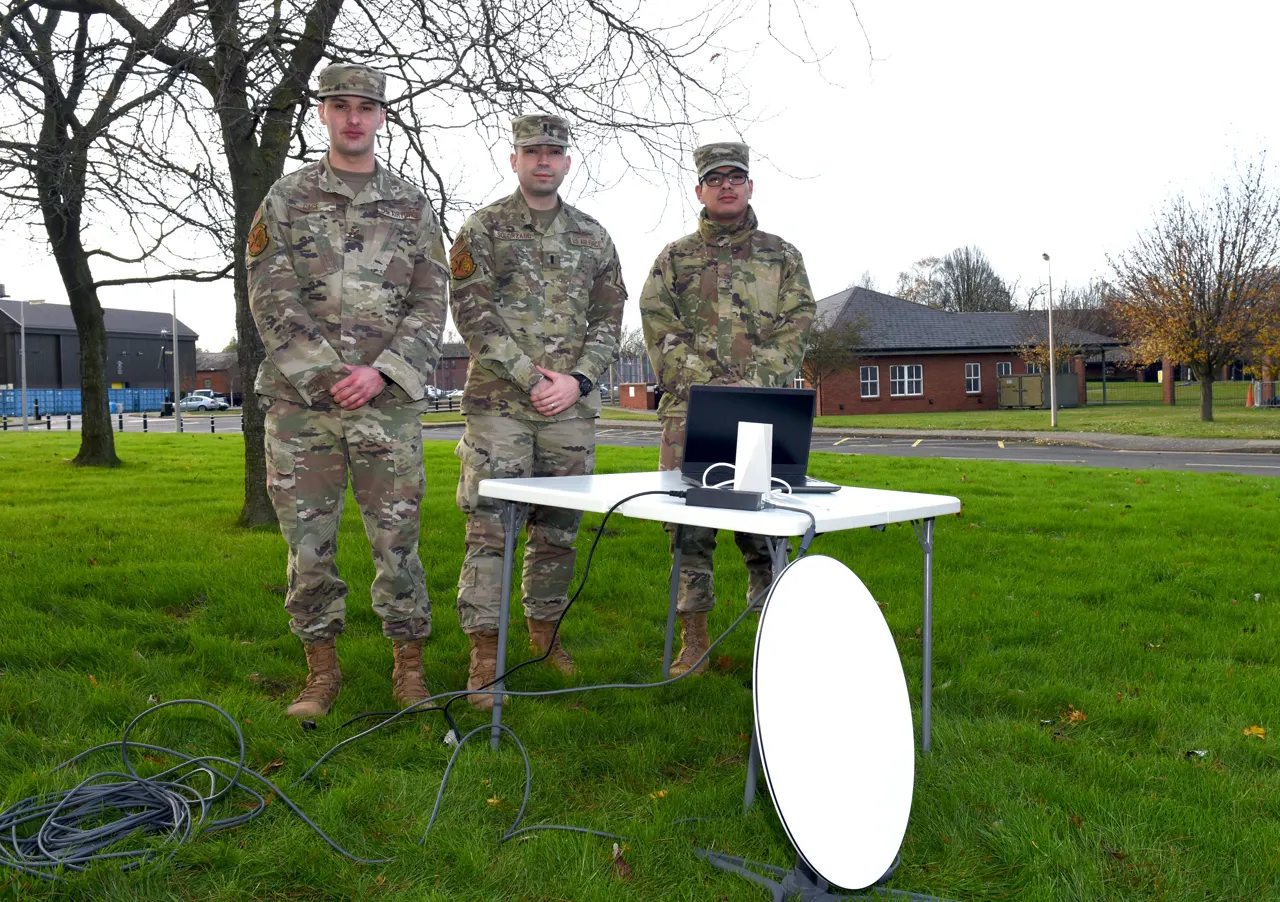
A state can have several roles in relation to a company: it authorises its operations, supervises it and buys its services. If important functions depended on that provider, these roles could conflict.
An army can also make itself vulnerable by using a foreign private network, as the Russian case shows. Cooperation with SpaceX was helpful to Ukraine here. The underlying dependence does not disappear: anyone who needs access requires either the operator's continued cooperation or a replacement that is actually ready to use.
An authority might, for example, want to enforce stricter requirements while other state bodies warn of consequences for their services. The provider would not need to make an explicit threat. The possibility of withdrawal and a lengthy replacement process could already influence negotiations.
States, in turn, have means of exerting influence. Authorisations, courts and public contracts can constrain a company. A satellite provider is not beyond state power either. International customers must therefore also consider which state decisions their provider is subject to.
Contracts can establish binding obligations. Their effectiveness in a crisis also depends on what can be enforced in practice during a dispute. Compensation paid later cannot replace a connection needed at the time. For essential public functions, arrangements for continued operation, transition and replacement would therefore need to be made before a conflict.
10An outage does not require intent
On 24 July 2025, monitoring company ThousandEyes observed a worldwide Starlink outage lasting roughly two and a half hours. Its analysis points to a failure in shared control functions. [9] This is not evidence of a deliberate shutdown. It shows that a single problem can affect many customers far apart at the same time.
The more institutions use Starlink, the more could be affected simultaneously by such an outage. Simply holding two contracts is therefore not enough. If both offers use the same underlying service, they could share a critical point of failure.
After Hurricane Helene in 2024, 24 counties in North Carolina received Starlink equipment, according to the responsible authority. At the same time, the VIPER public-safety radio network remained operational despite damage; some emergency calls were routed to other counties. [10] Starlink contributed while other routes continued to support important tasks.
Those independent routes also need funding in everyday operation. They might look more expensive than relying on a single provider and could therefore be lost in spending cuts.

11Internet access, platforms and data
SpaceX acquired xAI on 2 February 2026. The platform X was already part of xAI. Communications access, AI and a social platform are therefore connected within the same corporate group. This alone does not establish a shared pool of data. [11]
In January 2026, Reuters reported a revised Starlink policy that provides for personal data to be used for AI trainingAI trainingProcessing data to teach or further adjust the patterns learned by an AI model. under certain conditions. According to the report, it was unclear which data would actually be used. [12] Starlink's help pages, meanwhile, say that internet history, individual browsing habits and location-tracking data are not shared with AI models, and describe an opt-out. [13]
According to the company, Enterprise customersEnterprise customersBusiness customers on an applicable enterprise contract. The privacy exceptions depend on that contract type. are excluded from data sharing for AI training; data from government accounts would not be used for it. Starlink FAQ [13] The applicable rules also depend on the region and type of processing. The global policy mentions the company's own AI training and limited sharing with partners; the setting described there relates to third-party training. Global privacy policy The EEA+EEA+The provider’s label for the area covered by this regional privacy supplement, including the European Economic Area. supplement distinguishes active consent to sharing for training from other AI-assisted service improvements for which the company invokes legitimate interests. These are the company's statements, not judicial confirmation that its practices are lawful. EEA+ supplement
Customers need understandable information about which data is shared, with whom and for what purpose. None of this establishes that Musk can read every encrypted message merely by operating the network. It remains important whether customers can effectively object to changes, especially when switching providers is difficult.

12Which future remains possible

An alternative does not have to replace every service to be useful. For some tasks, another route for essential messages is enough; others need a high-capacity connection. In February 2026, for example, Eutelsat and Intellian announced the availability of a portable OneWeb terminal for government and defence customers. [14] This offers another possible replacement. The announcement says nothing, however, about whether a particular aid organisation can obtain the equipment, contracts and necessary capacity at short notice.
Public buyers could already require independent backup connections and practise using them. Competition authorities could examine whether further acquisitions or contracts block competitors' access. Customers could switch more easily if equipment, contract terms and interfaces allowed it.
For major restrictions, it would need to be clear who is responsible and how those affected can seek review. Legitimate security measures would still need to remain possible. Backup connections cost money and take time to arrange. Authorities and other customers would therefore need to decide which tasks they must be able to carry out even during an outage.
A capable provider can give people opportunities they previously lacked. Where it becomes indispensable, its power grows too. How much power it should be allowed ought to be decided while switching is still possible.