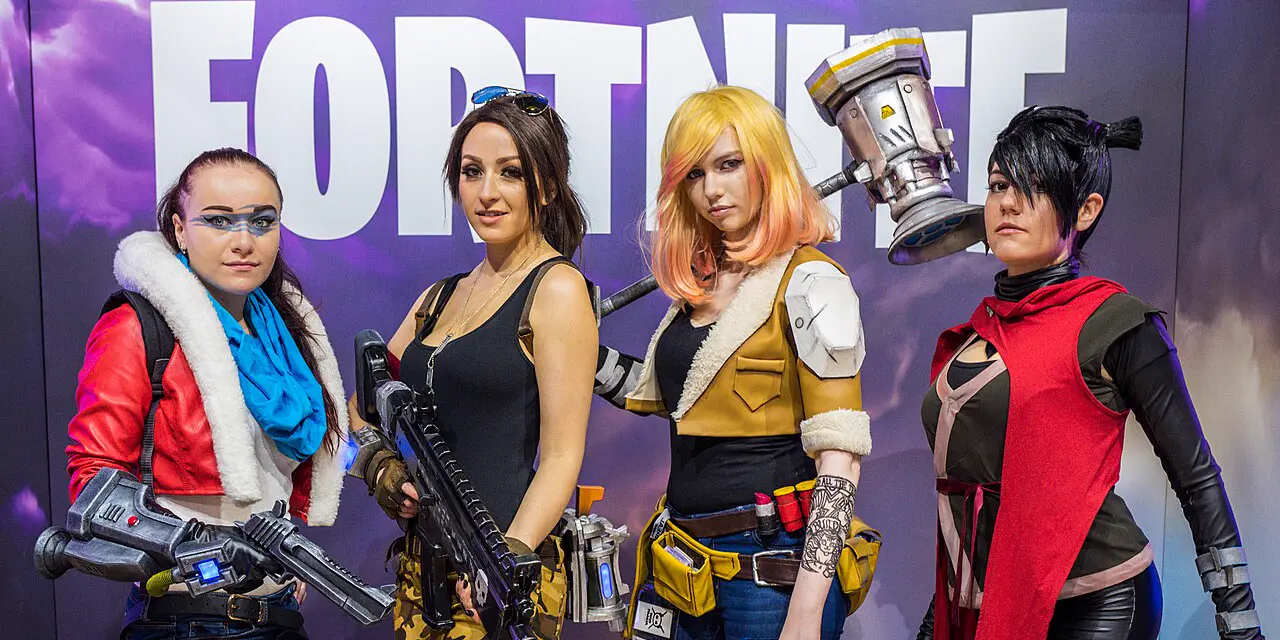
What is Fortnite?
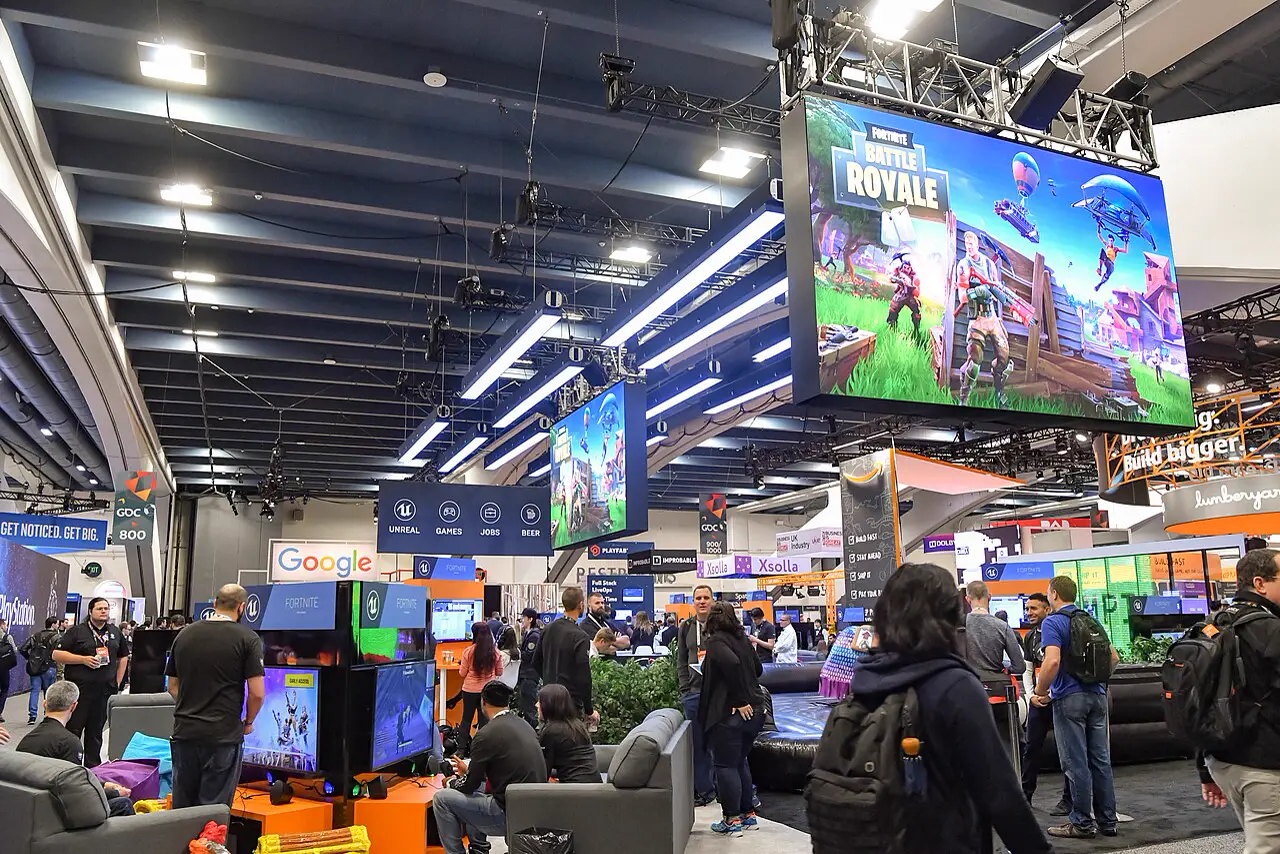
Fortnite is a battle royale shooterA game in which up to 100 players compete against each other. Only the last survivor wins. in which up to 100 players parachute onto an island and fight each other. The objective: be the last one standing. It was developed in 2017 by Epic Games (USA) and has since become a global phenomenon.
What makes it distinctive: players can not only shoot but also build — walls, ramps, shelters. The colourful, cartoon-like graphics set Fortnite apart from realistic shooters. There is no blood, no bodies. Defeated players simply disappear.
Popularity: According to the JIM Study 2023, Fortnite ranks 3rd among the most popular games for children and teenagers — behind Minecraft and FIFA. Many primary school children already play it, even though the age rating is 12.
Age rating: 12 and up — but is that too young?

Fortnite has a rating of 12 and above from the USKUnterhaltungssoftware Selbstkontrolle — the German rating body for video games. (Germany's video game rating authority). The European PEGIPan European Game Information — the pan-European age rating system for games. likewise gives it 12+.
Rationale: The cartoon-like graphics and absence of blood and bodies mean the game is considered acceptable for children aged 12 and over from a child protection perspective. The USK states that the stylised depiction allows 12-year-olds to recognise the events as fiction at all times.
However: many media educators recommend a minimum age of 14. Why?
• Frustration potential: you lose 99 out of 100 games. Younger children often struggle to process this.
• Complexity: building, shooting and strategic thinking simultaneously — this quickly overwhelms younger players.
• Competitive pressure: the game is extremely competitive. Children constantly compare themselves with others.
$520 million fine: Epic Games and child protection

In December 2022, the US consumer protection authority the FTCFederal Trade Commission — the US agency for consumer protection. imposed a record fine on Epic Games: $520 million. The allegation: massive violations of COPPAChildren's Online Privacy Protection Act — US law protecting children's data online..
What happened?
1. Data collection without consent: Epic Games collected personal data from children under 13 without parental consent. This violates COPPA.
2. Children exposed to unknown adults: the default settings allowed children to chat with unknown adults. This led to sexual harassment and bullying.
3. Barriers to data deletion: parents requesting deletion of their children's data had to overcome what the FTC called "unjustifiably high hurdles".
4. Unintended purchases: Epic Games allegedly tricked customers into unintended transactions. Of the $520 million, $245 million is in refunds for these dark patternsManipulative design choices that lead users into unwanted actions..
V-Bucks: the virtual currency as a money trap
Fortnite itself is free. However, Epic Games earns billions through in-app purchases. The currency: V-BucksFortnite's virtual currency (stands for "VinderTech Bucks"). Purchased with real money..
Prices (2026):
• 1,000 V-Bucks = £7.99
• 2,800 V-Bucks = £19.99
• 5,000 V-Bucks = £31.99
• 13,500 V-Bucks = £79.99
What do children spend V-Bucks on?
• Skins: character appearance (800–2,000 V-Bucks, roughly £6–16)
• Battle Pass: seasonal subscription with rewards (950 V-Bucks = approx. £7.50)
• Emotes: dances and gestures (200–800 V-Bucks)
• Pickaxes, gliders, wraps
The problem with in-game currency: children do not see pound or euro amounts — only "800 V-Bucks". The conversion required obscures the real price. Psychologists call this "money illusion" — the feeling that you are not really spending money.
Extreme case from the USA (2025): two children bought V-Bucks worth 65,000 V-Bucks without their parents' knowledge — money that had been saved for the family holiday.
What parents can do:
• Block in-app purchases through the platform (PlayStation, Xbox, Nintendo Switch)
• Set up parental controls in Epic Games (PIN required for purchases)
• Buy V-Bucks gift cards with a fixed amount instead of saving a credit card
Chat & cybergrooming: when strangers approach children
Fortnite is a multiplayer game. Players can communicate via text chat and voice chat. This is useful for coordinating with friends — but also a risk.
What jugendschutz.net found in 2024:
During their research, the German child protection organisation came across usernames indicating child sexual abuse:
• "Kinderschänder22" (child abuser)
• "Gr00mingminors69"
• "childsexual"
jugendschutz.net also found far-right and Islamist slogans in usernames:
• "Holohoax45" (Holocaust denial)
• "Sieg HeiL" (unconstitutional symbol)
Chat content: text chats contained documented obscene language, insults and requests for contact details:
• "What's your address?"
• "What's your phone number?"
• "What's your Snapchat?"
The aim: to move conversations to other services where no moderation takes place.
What parents can do:
• Restrict or disable chat functions via parental controls
• Allow children to play only with confirmed friends (not with strangers)
• Talk to children about cybergrooming: never share personal information
• Show how to block and report inappropriate players
User-generated content: from 9/11 games to extremism
Since 2024, Fortnite is more than just Battle Royale. In Creative mode, players can create their own "islands" — essentially mini-games. Thousands of such user-generated pieces of content are available for free.
Problem: not all content is child-appropriate. jugendschutz.net found during its 2024 research:
• 9/11 game: a user-generated game based on the September 11 attacks
• Extremist content: games with far-right or Islamist slogans
• Sexualised violence: violations of German youth media protection law
The filtering problem: user-generated games are not filtered by age group. A 10-year-old can theoretically access content rated 16+ — unless parents block it via parental controls.
Problem: the system is based on self-assessment. If a creator provides inaccurate information, this only comes to light when users report it. jugendschutz.net criticises the fact that reports do not consistently result in content being removed.
Addiction potential: "just one more game"
Fortnite is designed to keep players playing. The mechanisms:
1. Variable rewards: you never know whether the next game will be the win. This keeps tension high.
2. Battle Pass: a seasonal subscription (950 V-Bucks = approx. £7.50) with rewards. Anyone who does not play daily misses content. This creates FOMOFear Of Missing Out — anxiety about missing something..
3. Social pressure: friends play, you want to keep up. Those without skins get teased.
4. No natural endpoint: after each game, the next can be started immediately. There are no breaks.
Psychologist Karl Brühwiler says: "Chat rooms with children and adults where no one is in charge are inherently problematic." The addiction potential is enormous.
What parents can do:
• Agree fixed gaming times (e.g. 1 hour per day, not every day)
• Gaming days rather than gaming hours: e.g. Saturday 2 hours rather than daily
• Ensure school, homework and social contacts do not suffer
• Play together: show interest, understand what fascinates your child
Privacy: what does Epic Games collect?
Epic Games collects extensive data — some improvements were made following the COPPA fine, but many data points continue to be captured:
What data is collected?
• IP addresses, device information, location data
• Gaming times, islands visited, content purchased
• Text chat messages (for "moderation")
• Voice chat (last 5 minutes recorded for minors)
• Linked to Epic Games Store, Unreal Engine
How is the data used? According to Epic Games, for "product improvement", "personalisation" and "security". The privacy policy is long and complex — barely comprehensible for children.
Problem: children often enter false dates of birth. There is no real age verification. Epic Games relies on self-declaration.
What do experts say?
Opinions on Fortnite are divided:
Those who view Fortnite positively:
• Pro Juventute (Switzerland): "Fortnite has practically all the characteristics of successful games: great graphics, free download, creative possibilities."
• Spieleratgeber NRW: promotes teamwork, strategic thinking, communication
• Media educators: cartoon-like graphics reduce the perception of violence
Those who view Fortnite critically:
• jugendschutz.net (2024): violations of the German Youth Media Protection Treaty, inadequate age filtering, insufficient moderation
• Internet-ABC: recommends a minimum age of 14 rather than 12
• Medial+ (2025): warns of gambling mechanics and cost traps
Fortnite vs. Roblox vs. Minecraft
All three games are extremely popular with children, but have different profiles:
Fortnite:
• Age 12+, shooter elements, competitive
• Main risks: addiction, purchases, chat, frustration
• Better suited to older children (14+) with supervision
Roblox:
• Age 0+, but many user-generated items are problematic
• Main risks: inappropriate games, cybergrooming, currency traps
• Younger target audience, but higher risk of misuse
Minecraft:
• Age 6+, creative and educationally valuable
• Main risks: chat, mods, privacy
• Most child-friendly of the three with the right settings
Parental controls: what parents can configure
Epic Games offers parental controls through the Epic Games account portal. The following can be configured:
1. Chat settings:
• Off: no text chat
• Friends only: text chat only with confirmed friends
• Everyone: chat with all players (not recommended)
2. Voice chat:
• Disable completely
• Friends only
• With everyone
3. Purchases:
• PIN required for all purchases
• Spending limit: $100/day (automatic for under-13s)
4. Age ratings for user-generated islands:
• Block islands above a certain age rating
• Manually approve individual islands
5. Daily email reports: parents can be notified of changes to the account
Conclusion: Fortnite with boundaries
Fortnite is not inherently harmful. The cartoon-like graphics, creative building and teamwork have genuine positive aspects. Many children play it responsibly.
However: the $520 million fine shows that Epic Games long neglected child protection. Even in 2024, jugendschutz.net found significant shortcomings.
What parents should do:
• Take age ratings seriously: Age 12 is the minimum; many educators recommend 14+
• Set up parental controls: manage chat, purchases and age ratings
• Talk about the risks: discuss cybergrooming, cost traps and data privacy
• Limit gaming time: set clear rules, no daily unlimited play
• Play together: show interest, understand what fascinates your child
With these measures, Fortnite can be a controlled part of a young person's digital life. Without parental supervision, however, cost traps, addiction and contact with strangers become real risks.